
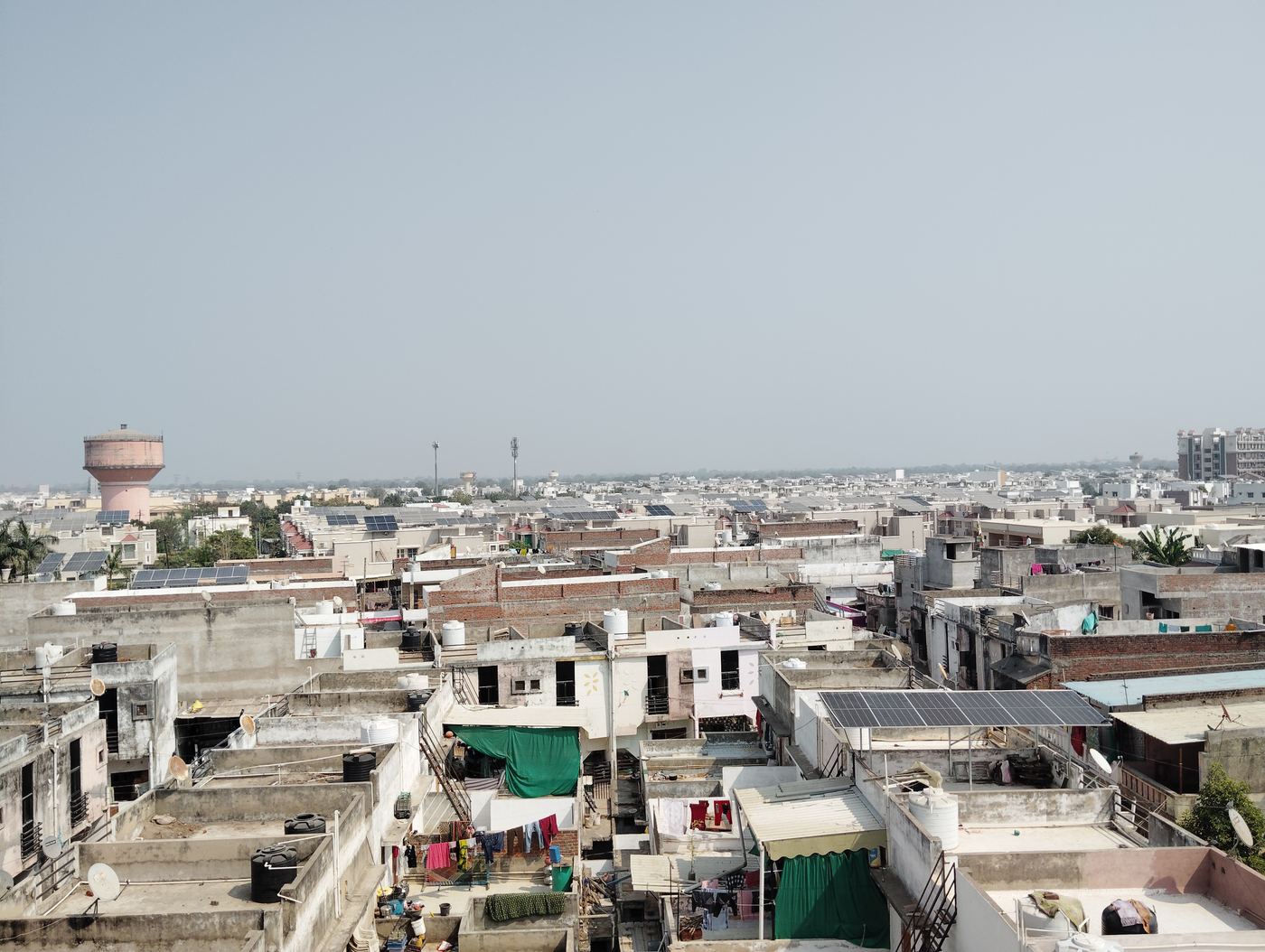
Utility Server & Grid Integration
Help an electricity company or national energy authority connect thousands of homes, businesses and industrial sites with solar and batteries to the grid, safely, securely and under the network’s control.
What network operators are facing.
- Voltage and thermal limits
High rooftop solar on a feeder pushes voltage up and loads equipment in the middle of the day.
- Connection queues and refusals
Without visibility, the safe answer is to limit or refuse new solar connections in busy areas.
- Invisible to the control room
Thousands of small systems behave like one large power station that operations cannot see.
- Falling daytime demand
Strong midday solar can push network demand to uncomfortably low levels.
- Many brands, many protocols
Every inverter and battery manufacturer communicates differently.
- Costly network upgrades
Reinforcing the network to absorb uncontrolled exports is expensive and slow.
Bring distributed energy resources into network operations.
The Utility Integration Server sits between the electricity company and the distributed energy resources on its network. Each site registers with its own digital certificate, through its edge controller or a compliant inverter.
From that moment the utility sees what each site is generating and exporting, and can set limits that devices follow automatically.
- Feeder North 12,140 sites · Export limit 5.0 kWNormal
- Feeder North 21,865 sites · Export limit 5.0 kWNormal
- Feeder Central3,210 sites · Export limit 1.5 kWConstrained
- Feeder Industrial412 sites · Export limit 10 kWNormal
- Feeder Coastal1,530 sites · Export limit 3.0 kWDefault limits
More clean energy from the same network.
Instead of a permanent low export cap, limits follow real network conditions: high when there is capacity, reduced only where and when a feeder is constrained.
A conservative fixed cap protects the network on its worst day, but wastes clean energy every other day.
Illustrative example for one home on a sunny day. Actual results depend on the network and each programme's rules.
Works with the systems you already run.
The server is designed to complement, not replace, the utility's existing control room and distribution management systems, exchanging data through standard interfaces so operators do not need another parallel screen.
The integration scope is agreed with each utility's operations and information technology teams.
Thousands of connected homes, businesses and industrial sitesIllustrative
Without and with the Utility Integration Server.
| Without | With | |
|---|---|---|
| Visibility | Rooftop systems are invisible to operations | Generation, exports and device status across the fleet |
| Export rules | One conservative fixed cap for everyone | Flexible limits that follow network conditions |
| New connections | Limited or refused on busy feeders | More connections on the same network, within safe limits |
| Many brands | Separate approaches for each manufacturer | One standards-based integration |
| Security | Unknown devices on the network | Every device identified by a digital certificate |
Value for the operator, the customer and the country.
For the network operator
Fleet-wide visibility of distributed energy resources, limits by feeder or area, real-time response to constraints, and safe fallback behaviour if communication is lost.
For customers
Flexible exports instead of a permanent low cap, so more of the solar they paid for reaches the grid.
For the country
More rooftop solar on the existing network, supporting national renewable energy targets and reducing reliance on fuel-based generation.
From pilot to national programme.
- 1Assess
Agree goals, connection rules, default limits, hosting and the equipment already in the market.
- 2Pilot
Connect a first group of homes, businesses and industrial sites on selected feeders and prove the approach.
- 3Roll out
Extend to more feeders and areas, with installer training and registration at commissioning.
- 4Operate
Monitor, refine limits and support the programme as it grows.
Built on open standards.
The technology supports or is designed to align with these standards. Conformance requirements for each programme are confirmed with the utility; we do not claim certification unless it has been confirmed for your project.
Questions from network engineers
What happens if communication with a site is lost?
Each device falls back to safe default limits agreed with the utility in advance, and returns to dynamic limits when communication is restored.
Which inverters and batteries can take part?
Devices that support the programme's standard can connect directly; others connect through the edge controller. Compatibility is confirmed against the equipment in each market before the pilot.
Does it replace our control room systems?
No. It is designed to complement existing control room and distribution management systems, with the integration agreed with your teams.
Where is the server hosted and who owns the data?
Hosting and data governance are agreed with each utility, including options to host within the country where required.
How is security reviewed?
We work with the utility's security team on device identity, encryption and access before deployment. See cybersecurity and secure communications.
Planning a rooftop solar programme or a change to connection rules?
Talk to us about a pilot that brings distributed energy resources into your network operations.